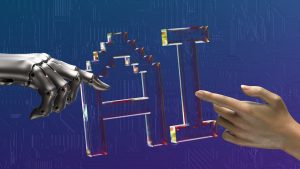
When an MLA in New Brunswick used AI to draft a speech, it sparked a debate over authenticity, accountability, and the future of AI in government—offering clear ethics governance lessons for any institution.
In New Brunswick, a Member of the Legislative Assembly used a large language model to draft a legislative speech, raising questions about whether AI‑generated rhetoric breaches democratic integrity, transparency, and accountability, and highlighting the need for clear ethics guidelines for AI use in public office.
Ethics of AI in Governance: Lessons from the New Brunswick Legislative Controversy
As generative AI becomes capable of mimicking human rhetoric, a recent incident in the New Brunswick Legislature has ignited a fierce debate: Is using AI to draft speeches a tool for efficiency or a breach of democratic integrity.
When an elected official uses a machine to formulate their words, the very foundation of representative democracy feels a bit shaky.
We aren’t just talking about a shortcut for writing emails; we are talking about the core of political discourse.
This situation offers profound ethics governance lessons for any institution looking to integrate automation into sensitive human processes.
Ethics of AI in Governance: Lessons from the New Brunswick Legislative Controversy
As generative AI becomes capable of mimicking human rhetoric, a recent incident in the New Brunswick Legislature has ignited a fierce debate: Is using AI to draft speeches a tool for efficiency or a breach of democratic integrity?
When an elected official uses a machine to formulate their words, the very foundation of representative democracy feels a bit shaky.
We aren’t just talking about a shortcut for writing emails; we are talking about the core of political discourse.
This situation offers profound ethics governance lessons for any institution looking to integrate automation into sensitive human processes.
The Incident: When Algorithms Enter the Chamber
The controversy in New Brunswick centered on a Member of the Legislative Assembly (MLA) who used Large Language Models (LLMs) to draft text for a legislative session.
While using technology to organize thoughts isn’t new, the use of AI to generate substantive political rhetoric creates a unique friction.
When the words coming from a podium are the result of a prompt rather than a person’s lived experience or researched conviction, the audience is left wondering: Who is actually speaking?
According to official transcripts from the Legislative Assembly of New Brunswick, the use of AI-generated text became apparent through specific linguistic patterns and factual inconsistencies.
It wasn’t just about the style, though.
It was about the sudden shift in how policy was being articulated.
The incident sent shockwaves through the province, forcing a conversation that many had been avoiding.
Have you ever listened to a speaker and felt like the words were just a little too “perfect” yet strangely hollow?
That is exactly what happens when machine-yahooed rhetoric meets the nuance of political debate.
It highlights the first of many ethics governance lessons: technology can mimic form, but it cannot replicate the weight of accountability that comes with a human voice.
The Ethical Dilemma: Authenticity vs.
Efficiency
At the heart of this debate lies a tension between two valid goals: the desire for efficiency and the necessity of authenticity.
On one hand, MLAs are human beings with limited time and massive workloads.
If an AI can help them structure a complex policy argument or summarize a lengthy report, isn’t that just modern Contentsproductivity?
The Erosion of Representative Connection
However, the role of a legislator is to represent the specific needs, emotions, and values of their constituents.
When an AI drafts a speech, it essentiallyWMNDA a “statistical average” of its training data.
It isn’t drawing from the specific struggles of a family in New Brunswick; it is drawing from a massive dataset of existing text.
This creates a “representation gap.”
If the machine is doing the thinking, is the representative actually representing anyone?
This is a critical point for researchers studying the IEEE Global Initiative on Ethics of Autonomous and Intelligent Systems.
They often point out that autonomy in AI systems must be balanced with human oversight to ensure that values aren’t lost in the pursuit of speed.
The Transparency Requirement
There is also the issue of honesty.
If a politician uses AI, do they have a moral obligation to tell the public?
Most people would say yes.
When we don’t know where the words come from, we can’t judge the intent behind them.
This lack of transparency can quickly turn into a crisis of trust, making the public feel that their representatives are merely operating “black box” scripts rather than engaging in genuine leadership.
Legal and Procedural Frameworks
As we look at the legal side of things, we find ourselves in a bit of a “Wild West” scenario.
Currently, most jurisdictions, including Canada, do not have specific laws that prohibit an MLA from using AI to draft speeches.
The rules of order in many parliaments are designed to regulate behavior and Contentsdecorum, not the specific software used to prepare for a session.
However, the Canadian Centre for Tech Policy has noted that algorithmic accountability is becoming a central pillar of modern governance.
We are seeing a shift where the focus is moving from “can we use it?” to “how do we regulate its impact?” Even if there isn’t a law against AI-drafted speeches, there are rules regarding the accuracy of the official record.
The legal challenge is that our current frameworks are reactive.
We are trying to apply old rules to new realities.
For instance, if an AI makes a false claim during a session, who is legally responsible?
The programmer?
The AI company?
Or the MLA who read the words?
The answer, for now, remains firmly on the human, but the complexity of proving intent or negligence in an AI-assisted environment is a looming legal headache.
The Risk of Hallucination and Misinformation
One of the most dangerous technical aspects of LLMs is “hallucination.” This occurs when an AI confidently presents false information as a fact.
In a casual setting, a hallucination is a minor flores.
In a legislative chamber, it can be a那個catastrophe.
If an MLA reads an AI-generated statistic about healthcare funding that sounds authoritative but is completely made up, they are injecting misinformation into the official public record.
This isn’t just a mistake; it’s a failure of the democratic duty to inform the public and the government.
The Impact on Official Records
Official transcripts serve as the historical and legal record of a nation’s decisions.
When AI errors enter these records, they create a “poisoned well” effect.
Future policymakers might cite those errors, and the misinformation becomes baked into the legislative history.
This is one of the most vital ethics governance lessons we can take from the New Brunswick incident: the integrity of the record is more important than the speed of the speech.
Future Outlook: Establishing Guidelines for Public Office
So, where do we go from here?
We can’t stop the tide of AI, nor should we.
The goal isn’t to ban the technology, but to build a framework for its responsible use.
We need to move toward a model of “Human-in-the-Loop” governance.
First, we need clear transparency standards.
If AI is used for drafting, it should be disclosed.
This isn’t about shaming the user; it’s about informing the citizen.
Second, we need rigorous fact-checking protocols that are non-negotiable.
No piece of AI-generated text should ever reach a Contentsfloor without being vetted by a human expert.
Finally, we need to develop “algorithmic literacy” among public officials.
Understanding how these models work—including their tendencies to Contentsbias and hallucinate—is no longer an optional skill for a politician; it is a requirement for modern office.
How can institutions implement ethics governance lessons?
Institutions should start by creating clear, written policies that define the permitted uses of AI in official capacities.
This should include mandatory disclosure requirements and strict rules against using AI for final decision-making or official record generation without human verification.
Is it illegal for an MLA to use AI to write a speech?
Currently, most jurisdictions do not have specific laws against AI drafting, but it may violate internal parliamentary rules regarding authenticity and accuracy.
Can AI-generated speeches be used as official evidence?
Generally, no; the responsibility for the content remains with the human representative, making accuracy a critical concern for legal and historical integrity.
Is it illegal for an MLA to use AI to draft a speech?
Currently, no specific law in Canada prohibits an MLA from using AI to write speeches; however, existing rules on accuracy and accountability still apply, and the MLA remains responsible for any false statements made.
Can AI‑generated speeches be used as official evidence?
AI‑generated text can be entered into the official record, but if it contains inaccuracies, the elected official who delivered it bears responsibility, as there is no legal shield for machine‑produced content.
What are the main ethical concerns of using AI in legislative speeches?
The core issues are authenticity versus efficiency, the risk of a representation gap where AI reflects a statistical average rather than lived experience, and the transparency problem that obscures who is truly speaking.
How can institutions implement ethics governance lessons from this controversy?
Institutions should establish clear guidelines requiring disclosure of AI use, maintain human oversight for accountability, and ensure that AI‑assisted content aligns with the values and needs of the constituents they represent.
Niranjan K. is a web development writer and programming enthusiast who specializes in web programming, coding tutorials, and how-to guides. He creates practical, beginner-friendly content covering HTML, CSS, JavaScript, PHP, Python, WordPress, APIs, databases, web frameworks, and modern development tools.
With a focus on hands-on learning and real-world applications, Niranjan K. simplifies complex programming concepts into clear, step-by-step tutorials. His goal is to help students, developers, and tech enthusiasts build skills, solve coding challenges, and stay up to date with the latest trends in web development and software engineering.