

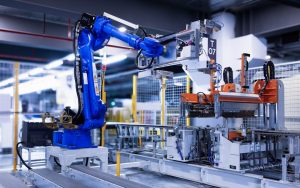
AI and IoT can turn a factory into a proactive, data-driven operation by connecting machines, analysing sensor data and automating key decisions. This guide covers how predictive maintenance, computer vision and supply-chain optimisation can cut downtime, improve quality and help manufacturers respond to disruption.
AI and IoT support smart factories by connecting machines through sensors, analysing operational data and acting on real-time insights. Key uses include predictive maintenance, computer-vision quality control and supply-chain optimisation. These applications help manufacturers reduce unplanned downtime, catch defects, avoid unnecessary part replacements and improve efficiency while moving from reactive production to proactive, data-driven operations.AI and IoT are transforming factories into self-optimizing ecosystems, turning data into actionable insights to cut downtime, boost quality, and future-proof operations in an unpredictable market.
Smart factories use AI and IoT to enable predictive maintenance, automated quality control, and real-time supply chain optimization, reducing downtime by up to 50% and improving efficiency.
Table of Contents
- Key Takeaways
- The Core Drivers of the Smart Factory Revolution
- Predictive Maintenance: Eliminating Unplanned Downtime
- Computer Vision and Automated Quality Control
- Optimizing Supply Chains Through Intelligent Automation
- Overcoming the Challenges of Digital Transformation
- The Future of Autonomous Manufacturing
Key Takeaways
- The assembly line of 2024 is no longer just a sequence of mechanical movements; it is a living, breathing digital organism.
- As global supply chains face notable volatility, the question is no longer if AI will transform your factory floor, but how fast you can integrate it before your competitors do.
- We are currently witnessing a massive smart factory revolution that changes how goods are produced, tracked, and delivered.
- This shift moves us away from traditional, reactive production toward a proactive, data-driven ecosystem.

The Core Drivers of the Smart Factory Revolution
The transition toward Industry 4.0 is not driven by a single piece of software. Instead, it stems from the convergence of several powerful technologies. You are seeing the integration of massive datasets with high-speed connectivity and advanced computing power. This combination allows machines to communicate with each other and with human operators in real-time.The Role of Industrial IoT
Industrial IoT (IIoT) serves as the nervous system of the modern plant. By embedding sensors into every piece of machinery, you create a continuous stream of data. These sensors track temperature, vibration, pressure, and speed. This data provides a level of visibility that was previously impossible in traditional manufacturing setups.Big Data and Machine Learning
Data alone is useless without a way to interpret it. This is where machine learning comes in. Algorithms analyze the massive datasets generated by IIoT sensors to find patterns. They can identify subtle deviations that suggest a machine is about to fail or that a production process is drifting out of specification.Predictive Maintenance: Eliminating Unplanned Downtime
One of the most significant benefits of the smart factory revolution is the move from reactive to predictive maintenance. In the past, you likely followed one of two paths: fixing machines when they broke (reactive) or replacing parts on a fixed schedule (preventative). Both methods are inefficient and costly. Reactive maintenance leads to sudden, unplanned downtime that halts production and disrupts supply chains. Preventative maintenance often leads to wasted resources because you replace perfectly good parts simply because the calendar says so.Using AI to Forecast Equipment Failure
Predictive maintenance uses AI to analyze real-time sensor data to predict exactly when a component will fail. For example, a bearing in a high-speed motor might show a specific vibration pattern 48 hours before it actually breaks. AI detects this pattern immediately. By identifying these signals early, you can schedule repairs during natural breaks in production. This minimizes downtime and extends the lifespan of your expensive equipment. Studies show that predictive maintenance can reduce maintenance costs by up to 30% and decrease downtime by a staggering 50%.
Computer Vision and Automated Quality Control
Quality control has traditionally relied on human inspectors or basic automated sensors. While human eyes are impressive, they are prone to fatigue and inconsistency. In a high-speed production environment, even a momentary lapse in attention can result in thousands of defective units. The smart factory revolution introduces computer vision to solve this problem. High-resolution cameras paired with deep learning algorithms can inspect products at speeds no human could match.Real-Time Defect Detection
Computer vision systems can scan products as they move along a conveyor belt. These systems look for microscopic cracks, color inconsistencies, or incorrect component placement. If a defect is detected, the system can automatically trigger a reject mechanism to remove the item from the line.Continuous Process Optimization
Beyond just finding defects, computer vision monitors the entire production process. It can track how much material is being used or how a liquid is flowing through a pipe. This allows you to adjust machine settings on the fly to ensure every item meets your highest standards.Optimizing Supply Chains Through Intelligent Automation
The smart factory revolution extends far beyond the walls of your plant. Modern manufacturing is deeply interconnected with a global network of suppliers and logistics providers. Any disruption in one part of the chain can cause a domino effect across your entire operation. Artificial intelligence helps you navigate this complexity by creating a highly responsive supply chain. Instead of relying on manual spreadsheets and delayed reports, you gain a real-time view of your entire ecosystem.Demand Forecasting and Inventory Management
AI algorithms can analyze market trends, seasonal patterns, and even weather data to predict consumer demand with incredible accuracy. This allows you to optimize your inventory levels. You can avoid the high costs of overstocking while ensuring you never face a stockout that halts production.Logistics and Route Optimization
Smart logistics uses AI to determine the most efficient ways to move raw materials in and finished goods out. This reduces fuel consumption, lowers shipping costs, and ensures timely delivery. By integrating your factory data with your logistics data, you create a seamless flow from raw material to the end consumer.
Overcoming the Challenges of Digital Transformation
While the benefits are clear, the path to a fully automated facility is not without obstacles. Many organizations struggle with the initial complexity and the cultural shift required for such a massive transformation.Data Security and Cybersecurity
As you connect your machines to the internet, you increase your “attack surface.” Every sensor and connected device represents a potential entry point for cyberattacks. Protecting your intellectual property and preventing unauthorized control of machinery must be a top priority.The Skills Gap and Workforce Evolution
The rise of smart manufacturing changes the nature of work. You will need fewer manual laborers and more technicians who understand data science, robotics, and software engineering. Upskilling your current workforce is essential to ensure they can work alongside these new technologies.Legacy System Integration
Most established manufacturing plants operate with older, legacy machinery that was never designed to be connected to a network. Integrating these “dumb” machines into a modern digital framework requires specialized hardware and clever software layers to bridge the gap.The Future of Autonomous Manufacturing
As we move further into this decade, the smart factory revolution will only accelerate. We are moving toward a future of “lights-out” manufacturing, where entire production lines can operate autonomously without human intervention for extended periods. In this future, self-healing machines will detect their own flaws and order their own replacement parts. AI will design new products and immediately send the instructions to the machines on the floor. The boundary between digital design and physical production will continue to blur, leading to notable levels of customization and speed.
Related Guides
FAQ
What technologies drive the smart factory revolution?
The core drivers include Industrial IoT (IIoT) for real-time data collection, machine learning for pattern recognition, and computer vision for automated quality control. These technologies work together to create proactive, data-driven manufacturing systems.
How does predictive maintenance reduce costs?
Predictive maintenance analyzes sensor data to forecast equipment failures before they occur, cutting unplanned downtime by up to 50% and maintenance costs by 30% compared to reactive or preventative approaches.
Can AI improve supply chain resilience?
Yes. AI analyzes global supplier and logistics data in real time, enabling demand forecasting, dynamic inventory management, and rapid response to disruptions like delays or material shortages.
What role does computer vision play in manufacturing?
Computer vision automates defect detection on production lines, identifying issues like cracks or misaligned components faster and more consistently than human inspectors, ensuring higher product quality at scale.
| Maintenance approach | How it works | Result described in the article |
|---|---|---|
| Reactive | Fixes a machine after it breaks. | Can cause sudden, unplanned downtime that halts production and disrupts supply chains. |
| Preventative | Replaces parts on a fixed schedule. | Can waste resources by replacing parts that are still working. |
| Predictive | Uses AI to analyse real-time sensor data and forecast equipment failure. | Repairs can be scheduled during natural production breaks; the article cites maintenance-cost reductions of up to 30% and downtime reductions of up to 50%. |
Related Guides
FAQ
How do AI and IoT work together in a smart factory?
IIoT sensors embedded in machinery collect continuous data on temperature, vibration, pressure and speed. Machine-learning algorithms analyse that data to identify patterns, such as a possible component failure or a production process drifting out of specification.
What is predictive maintenance?
Predictive maintenance uses AI and real-time sensor data to forecast when a component may fail. Instead of waiting for a breakdown or replacing parts solely because a schedule has arrived, manufacturers can plan repairs during natural breaks in production.
How does computer vision improve quality control?
High-resolution cameras and deep-learning algorithms inspect products as they move along a conveyor belt. They can detect microscopic cracks, colour inconsistencies or incorrect component placement, trigger rejection of defective items and monitor process variables for continuous adjustment.
What technologies drive the smart factory revolution?
The transition to Industry 4.0 combines large datasets, high-speed connectivity and advanced computing power. These technologies allow machines to communicate with each other and human operators in real time, while machine learning interprets sensor data and supports predictive maintenance, quality control and supply-chain optimisation.