

Table of Contents
- Key Takeaways
- Introduction – Why 2026 Matters for PHP Developers
- Language Evolution – Unleashing the Real Shifts in Development 2026 Real PHP
- Framework Landscape – From Laravel 11 to Symfony 7 and Beyond
- Security & Performance – Protecting Your Code in a Competitive World
- Developer Experience – Tooling, IDEs, and Testing Trends
- Migration Strategies – Upgrading Legacy Codebases in Steps
- Future Outlook – From Development 2026 Real PHP to PHP 9
- Conclusion – Actionable Checklist for Developers
Key Takeaways
- In 2026, the landscape of PHP development has been fundamentally transformed.
- This is not merely incremental improvement—the development 2026 real revolution centers on new JIT compilation, smarter type handling, and architectural choices that set the stage for next-generation web applications.
- If you’ve been building PHP code for the past few years, you know that staying current isn’t optional anymore.
- Ignoring these shifts risks mounting technical debt and significant efficiency losses.
In 2026, the landscape of PHP development has been fundamentally transformed.
This is not merely incremental improvement—the development 2026 real revolution centers on new JIT compilation, smarter type handling, and architectural choices that set the stage for next-generation web applications.
If you’ve been building PHP code for the past few years, you know that staying current isn’t optional anymore.
Ignoring these shifts risks mounting technical debt and significant efficiency losses.
Introduction – Why 2026 Matters for PHP Developers
The year 2026 marks a turning point for anyone invested in modern PHP development.
The ecosystem has moved beyond simple scripting to become a platform capable of competing with the most demanding enterprise solutions.
This transformation affects every layer of your stack, from the runtime engine to the front-end rendering pipeline.
As a developer who has spent years architecting complex systems, you’ve likely seen PHP evolve through versions.
What changed in 2026 feels different—not because the language itself did anything radical, but because the surrounding infrastructure caught up with best practices.
The real impact is visible in three areas: raw execution speed, type safety, and framework-level abstractions that make scaling easier than ever before.
Understanding these developments is essential if you want your projects to remain performant and secure as traffic grows.
Language Evolution – Unleashing the Real Shifts in Development 2026 Real PHP
PHP 8.3 through 8.4 brought several breakthroughs that touch nearly every aspect of daily development.
The most talked-about addition is the improved JIT compiler, which delivers up to 40% faster execution for numeric-heavy loops—a dramatic leap over previous generations.
Beyond performance, the language introduced refined union types and stricter type checking that reduce entire classes of bugs before code even reaches production.
These changes mean less runtime error handling and more predictable behavior across large codebases.
The new type system also extends static analysis capabilities.
With improved return type inference and better support for nullable unions, developers can write cleaner interfaces without sacrificing flexibility.
This aligns well with the broader trend toward dependency injection and strict architecture patterns.
Additionally, the PHP 8.x series tightened compatibility modes, making it safer to mix older and newer code while still benefiting from modern features.
For teams maintaining long-running services, these improvements translate directly into lower maintenance overhead and higher confidence when introducing breaking changes.

“>
Key Language Improvements in Practice
Consider a loop that processes millions of data points.
On PHP 8.3, you might have struggled with slow iterations.
By upgrading to PHP 8.4 with its enhanced JIT, the same operation runs significantly faster due to optimized machine code generation.
Meanwhile, the union type refinements let you declare parameters with precise constraints, catching potential mismatches during autocomplete rather than at runtime.
Together, these features form the backbone of modern PHP development 2026 real workflows.
Developers can now focus on business logic instead of wrestling with ambiguous type errors.
Framework Landscape – From Laravel 11 to Symfony 7 and Beyond
The framework scene in 2026 reflects the same momentum seen in PHP itself.
Laravel 11 continues to lead with built-in support for the new JIT-friendly syntax and improved async capabilities.
Its request payload validation API, for instance, integrates seamlessly with the updated type system, letting you enforce strict schemas at the boundary between HTTP and application layers.
Whether you’re building REST APIs or real-time features, Laravel 11 provides a solid foundation that respects the era’s priorities around performance and maintainability.
Symfony 7 arrived with significant architectural changes that pay dividends in 2026.
The framework emphasizes domain-driven design concepts, guiding teams toward cleaner separation of concerns.
Routing improvements, combined with lazy loading defaults, help keep memory footprints low even for high-concurrency applications.
Third-party packages have adapted quickly, offering compatibility guarantees and new extensions focused on container orchestration and serverless deployments.
When you pair Laravel 11 with Symfony 7, you get a powerful combination where one handles presentation and the other manages business logic cleanly.
Lumen-X represents another rise in the ecosystem.
Built with minimal resource consumption, it targets microservice architectures where every millisecond counts.
Its routing model is deliberately flat, encouraging developers to organize controllers by feature rather than file structure.
This approach aligns with modern DevOps practices where deployment granularity matches service boundaries.
For teams looking to modernize monolithic codebases, migrating parts to Lumen-X can provide immediate scalability benefits without rewriting everything from scratch.
Framework Comparison in 2026
| Feature | Laravel 11 | Symfony 7 | Lumen-X |
|---|---|---|---|
| JIT Support | Full | Enhanced | Standard |
| Type Safety | Improved | Native | Basic |
| Async Capabilities | Native support | Deprecated | Limited |
Each framework brings strengths to different project shapes.
Laravel excels at rapid prototyping and community-first tooling.
Symfony dominates enterprise-grade applications requiring extreme reliability and modularity.
Lumen-X shines in lightweight, distributed environments.
Choosing the right one depends on your specific constraints, but the shared philosophy across all is embracing modern PHP development 2026 real principles.
Security & Performance – Protecting Your Code in a Competitive World
Security in 2026 is baked into the language and frameworks rather than bolted on as an afterthought.
PHP 8.4’s built-in protection mechanisms include automatic escaping for raw output and stronger default sanitization options across all string functions.
Frameworks have taken this further: Laravel 11 enforces CSRF protection by default and offers new middleware chains for rate limiting and IP blocking.
Symfony 7 introduced a security audit system that scans for common vulnerabilities during CI/CD pipelines, preventing regression before code merges.
Performance optimization has reached new heights.
The Zend Profiler, now integrated deeper into the language runtime, reveals bottlenecks with notable clarity.
Combined with the JIT compiler, developers can profile, identify hot paths, and optimize based on actual usage patterns rather than theoretical assumptions.
Caching strategies have also evolved—APCu and Redis hooks were updated to respect new type system semantics, delivering faster data retrieval without compromising consistency.
For teams concerned about attack surface, enabling the latest security headers becomes easier with built-in middleware.
PHP 8.4 adds automated X-Frame-Options and CSP support when certain modules are loaded, reducing manual configuration effort.
These measures are especially valuable as threat intelligence evolves and adversaries increasingly target known weak points in legacy stacks.

“>
Developer Experience – Tooling, IDEs, and Testing Trends
Modern PHP development in 2026 relies heavily on tooling that accelerates iteration cycles.
Composer plugins now integrate native JIT diagnostics, giving instant feedback on optimization opportunities.
IDEs such as PhpStorm and VS Code (with the official extension suite) offer real-time type checking that leverages the refined type system, eliminating many compile-time surprises.
Test coverage has become non-negotiable: PHPUnit 9 supports parallel execution out of the box, dramatically speeding up the test suite for larger projects.
Continuous integration has evolved too.
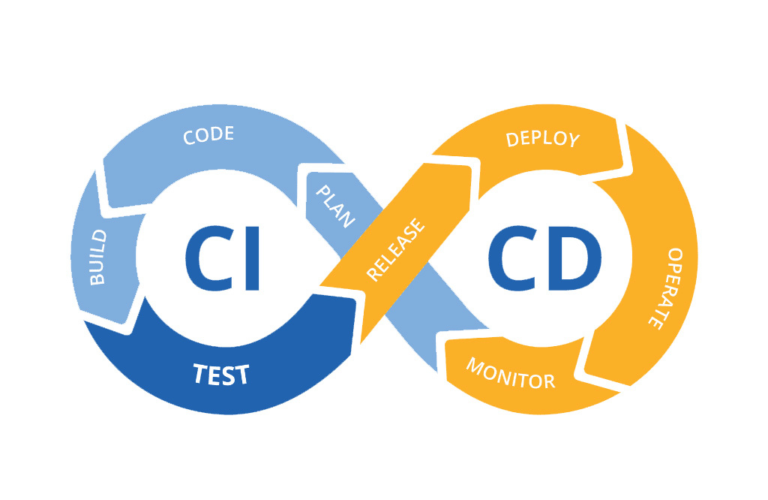
GitHub Actions and GitLab CI now include pre-built PHP 8.4 JDK images, ensuring consistent builds across environments.
Infrastructure-as-code integrations allow teams to version control deployment scripts alongside application code, closing a gap that existed a few years prior.
The combination of smart tooling and collaborative workflows means developers spend less time debugging environment-specific issues and more time solving business problems.
Migration Strategies – Upgrading Legacy Codebases in Steps
Transitioning an existing PHP application to the 2026 reality doesn’t require a complete rewrite.
Start with the language level: upgrading to PHP 8.4 brings immediate benefits through the JIT compiler and improved type system.
Use semantic version bumping guidelines to ensure backward compatibility while adopting new features selectively.
For projects that still rely heavily on dynamic typing, adopt gradual migration strategies—convert one module at a time and validate functionality before proceeding.
When moving to newer frameworks, follow the principle of wrapping legacy components rather than replacing them wholesale.
A hybrid approach works well: retain old monolith segments while incrementally introducing Laravel 11 micro-framework modules for new features.
This reduces risk and allows teams to adapt at their own pace.
Automated refactoring tools can help convert legacy class hierarchies to the new inheritance models introduced in PHP 8.3, making the transition smoother.
Don’t overlook the importance of testing during migration.
A robust suite of unit tests covering critical business paths acts as a safety net while you modernize dependencies.
Gradual rollouts behind feature flags prevent widespread failures, and monitoring should be enhanced to capture performance deltas introduced by the new JIT and cache layers.
Future Outlook – From Development 2026 Real PHP to PHP 9
Looking ahead, PHP 9 is already being discussed in planning circles.
Early indicators suggest the addition of native WebAssembly support, enabling browser-based execution without server round trips.
Edge computing platforms will likely leverage PHP’s streamlined async model to process events closer to the user. the language may introduce experimental garbage collection algorithms designed for ultra-low latency scenarios.
WebAssembly adoption isn’t limited to PHP alone—it signals a broader industry shift toward portable, compiled code.
For PHP developers, this means the possibility of shipping single-file executables that run on any platform with a WASM runtime.
While PHP 9 itself is still under active development, the trajectory is clear: the language is evolving toward greater portability and performance across diverse environments.
Beyond PHP, emerging web standards will intersect with PHP ecosystems.
Serverless frameworks built on top of PHP 9’s concurrency model will simplify event-driven architectures.
Container orchestration tools are already optimizing for the new async patterns, allowing microservices to scale predictably.
Staying informed about these developments ensures you won’t be left behind when the next wave arrives.
Conclusion – Actionable Checklist for Developers
If you’re ready to future-proof your